










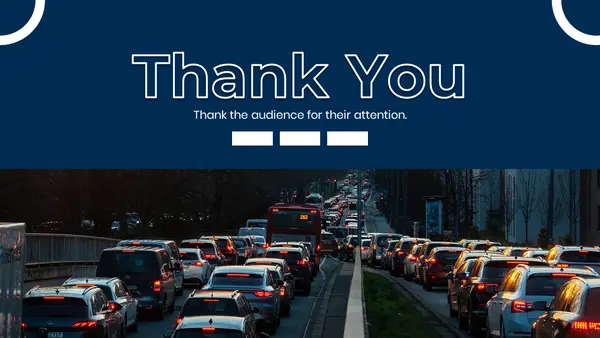
Traffic Rules or Road Safety Rules In PowerPoint, Google Slides, and Canva
Get ready for our Traffic Rule in India PPT Template This template includes 14 expertly designed slides that you can easily download in PowerPoint, Canva, and Google Slides.
It’s perfect for educating your community, improving corporate safety training, or making a lasting impression. Each slide is fully customisable, allowing you to adjust colours, images, fonts, and icons to create a presentation that reflects your unique style and message.
Let’s explore each slide’s key features and benefits to understand why this template is essential for effectively presenting traffic regulations.
Table of Content
- Traffic Rules or Road Safety Rules In India with PDF & PPT
- Introduction
- Recognising Road Signs
- Interpreting Traffic Signals
- Understanding the Right of Way
- Adhering to Speed Limits
- Safety Gear Saves Lives
- Special Rules for School Zones
- Conclusion
- FAQ
Traffic regulations form the foundation of safe driving and smooth traffic flow. Envision a scenario where there were no traffic signals, speed limits, or rules about who has the right of way. Such a situation would create disorder, leading to a significant rise in crashes, harm, and deaths. Traffic regulations are not random directives; they are essential guidelines crafted to keep order on our streets.
Introduction (Slide 03)
Why do Traffic Rules Matter?

This slide in the Traffic Rule PPT introduces the topic of traffic rules and provides a brief overview of why traffic rules and regulations are important. It also discusses the potential chaos that could ensue in the absence of traffic rules.
- Maintaining Order on the Roads
Traffic rules provide a clear and consistent framework for using the road. Without traffic signals and signs, intersections could become chaotic, leading to confusion and collisions.
Rules help to control vehicles and pedestrians, reducing traffic jams and ensuring that all drivers know what to expect. This method ensures there is no confusion or disruption, creating a safer and more eco-friendly cycling environment.
- Keeping all road users safe
Traffic rules are designed to protect everyone on the road: drivers, passengers, pedestrians and cyclists:
For drivers and passengers: Speed limits and a safe following distance help maintain vehicle manoeuvrability, reducing the risk of injury from excessive speed or sudden stops. Rules for using car safety belts and car maintenance are decorated in the same way.
For pedestrians: Pedestrians ‘intersections and visitors’ warnings confirm that people can proceed properly and reduce the risk of accidents and death.
For cyclists: dedicated motorcycle lanes and rules requiring drivers to yield to cyclists help prevent accidents involving cyclists, who can be particularly vulnerable.
By following these rules, avenue users contribute to a safer environment and reduce the risk of collisions.
- Reduce accidents and save lives
The link between following road rules and reducing accidents is well documented. Transportation is based on research and information, stops accidents, and indicates the effectiveness of life salvation.
Speed limit: Set in conjunction with the status of Avenue and traffic drifting, and perform a specific vehicle tour at a secure speed in a specific environment. By complying with these restrictions, drivers increase the time to respond to barriers and reduce the severity of collisions.
Traffic lights and signs: Contain important facts, including information on how to avoid or continue driving, and how to stop dangerous conditions at intersections and intersections.
Legal consequences: Violating visitor rules carries consequences and fines that deter risky driving behaviour and further reduce the likelihood of coincidences. Understanding and obeying traffic laws is necessary not only to avoid fines but also to protect lives and create a safer driving subculture.
This slide of the Traffic Rule PPT will help you engage the audience the audience by the importance of the topic which will lead to a strong foundation for the importance of Traffic rules.
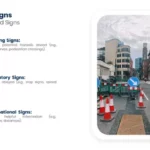
Recognising Road Signs (Slide 04)

This slide of the Traffic Rule PDF contains an explanation of how traffic rules create a consistent framework and highlights the details of how rules protect drivers, passengers, pedestrians, and cyclists.
- Warning Signs
Warning signs warn drivers of possible dangers or changes in road conditions. For example, a “Sharp Curve Ahead” sign warns of a sharp turn, urging drivers to lessen pace. Similarly, a “Pedestrian Crossing” sign suggests areas in which pedestrians might cross, requiring drivers to be more cautious. These symptoms help drivers predict and respond to traffic hazards, enhancing standard road safety.
- Regulatory Signs
Regulatory signs provide important instructions to maintain law and order and road safety. While stop signs should be avoided altogether, speed limit signs indicate the maximum speed permitted. These signs and symptoms make legal recommendations designed to secure security and ordered roads.
- Informational Signs
Information characteristics and symptoms are useful for voyage and road conditions. For example, a specific instruction and a “distance sign” publishing “Management sign” provides a distance to that location. These symptoms help drivers travel efficiently and reach their destination with ease.
This slide of the Traffic Rule PDF will help you provide a comprehensive understanding of the purpose of traffic signs and reduced accidents. This slide will also assist you with specific examples.
Interpreting Traffic Signals (Slide 05)

This slide of the Traffic Rule PDF contains various traffic signals in red signal, yellow signal, green signal, and arrow signal.
- Red Light
A Red traffic light signals that the vehicle needs to come to a complete stop and wait. Drivers should halt at the intersection, making sure they stop at the back of the stop line or crosswalk. This rule helps manipulate traffic to go with the flow and ensures secure movement via intersections.
- Yellow Light
A yellow light indicates that the light is set to turn red. Drivers must prepare to stop if it’s secure, but if they’re too close to stop accurately, they should proceed with caution. This warning prevents sudden stops and potential injuries.
- Green Light
When the light turns green, drivers can continue to drive through the intersection, provided it’s clean of other motors and pedestrians. This light enables visitors to motion within the indicated route.
- Arrow Signals
Arrow signals give precise instructions on when to turn. For example, a left turn arrow means drivers should turn left at an intersection. These indicators help monitor visitors’ slides and make safe and orderly turns.
This slide of the Traffic Rule PDF will help you clarify how to respond to traffic signals and will assist you in visualizing appropriate actions at intersections.
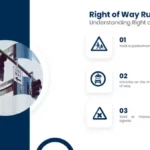
Understanding the Right of Way (Slide 06)
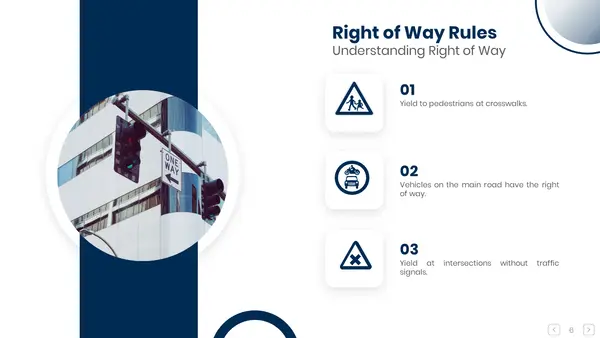
This slide of the Traffic Rule PPT contains the importance of crossing safely, Rules for vehicles on main roads versus secondary roads, and instructions for unregulated intersections.
- Yield to Pedestrians at Crosswalks
Pedestrians have the right of way at marked crosswalks and intersections, so drivers should slow down and stop if necessary to let them cross safely. This rule is important in busy areas or close to colleges, in which pedestrian site visitors are high.
- Vehicles on the Main Road Have the Right of Way
Vehicles travelling on main roads generally have the right of way over vehicles arriving via secondary roads and private roads. Drivers travelling on secondary roads must yield to main road users to avoid collisions and maintain free movement.
- Yield at Intersections Without Traffic Signals
At unregulated intersections, drivers must yield to vehicles approaching from the right or to vehicles already in the intersection. To avoid potential conflicts, we will carefully approach these intersections.
This slide of the Traffic Rule PPT will help you guide property rules in different road scenarios.
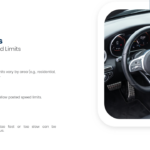
Adhering to Speed Limits (Slide 07)
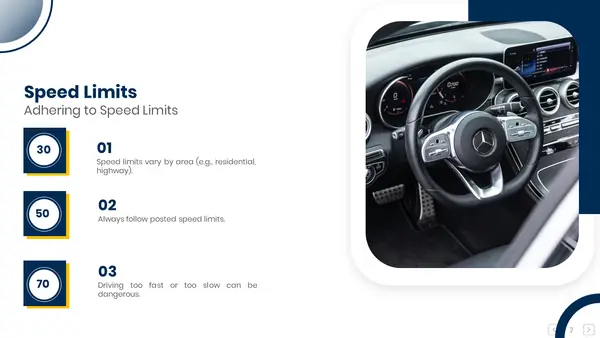
This slide on Road Safety Rules explains different speed limits, legal requirements, safety implications, and risks associated with both high and low speed.
- Speed limits vary by region
Speed limits are set according to the type of road and the surrounding area. Residential areas have lower limits to protect pedestrians, while highways have higher limits to allow faster travel. These limits take into account specific safety needs and road conditions.
- Please follow the speed limit that is always published
The speed limit indicated using signs and symptoms may be legally subject to execution, so you need to observe it. Compliance with these limits ensures safe speeds under current road conditions, thereby promoting safe driving.
- Driving too fast or too slow can be dangerous
Driving too fast increases the distance to stop and reduces reaction time, making accidents more frequent. Conversely, driving too slow can disrupt visitors’ navigation and increase the risk of collision. The balance of the pace is safe to use in the situation.
This slide of the Road Safety Rules will help you educate the audience on the importance of speed regulation and provide tips on maintaining safe driving speeds.
Safety Gear Saves Lives (Slide 08)

This slide of the Road Safety Rules PPT Templates contains the importance of using seatbelts and helmets which significantly reduces the threat of injury or death securing passengers throughout a crash.
- Seatbelts
Seatbelt laws require all vehicle riders and travellers to wear seatbelts, which significantly reduce the threat of injury or death by securing passengers throughout a crash. Wearing seatbelts remains an easy but essential safety step.
- Helmets
Helmet laws require helmets for bikers and regularly for cyclists, specifically kids. Helmets protect the head during falls or collisions reducing the risk of severe head injuries or deaths. Ensuring helmet use improves protection for bikers and cyclists.
This slide of the Road Safety Rules PPT Templates will help you emphasize the importance of using safety gear and will provide practical safety tips for vehicle and bike users.
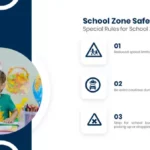
Special Rules for School Zones (Slide 09)

This slide of the Traffic Rules PPT Templates contains an explanation of why speed limits are lower near schools, provides tips for navigating areas with high traffic, and highlights instructions for stopping when school buses are picking up or dropping off students.
- Reduced Speed Limits in School Zones
To protect children and pedestrians, the speed limit in school zones will be reduced. These restrictions are typically relaxed during school hours to allow for increased pedestrian activity. Compliance with these restrictions helps prevent injuries involving children.
- Be Extra Cautious During School Hours
School hours are characterized by increased pedestrian activity, and children walking towards and from school. Drivers must always use caution and care on school grounds to avoid injury and keep children safe.
- Stop for School Buses When Picking Up or Dropping Off Children
When a school bus is stopped with flashing lights and an extended stop sign, drivers must stop and wait until the bus resumes motion. On divided highways, stop only if travelling in the same direction as the bus.
This slide of the Traffic Rules PPT Templates will help you highlight specific rules to ensure child safety and offer practical advice for driving in school zones.
Conclusion (Slide 11)

This slide of the Traffic Rules PDF Templates contains a summary of key points covered and encourages the audience to follow traffic rules for safety.
Following Traffic rules is everyone’s responsibility.
These rules are not only a legal obligation, but also an important measure to protect all road users and ensure traffic flow. By following the Highway Code, we collectively promote road safety, reduce the risk of accidents, and improve the overall driving experience.
Each one of them plays a role in maintaining traffic safety by following speed limits, understanding the right of way, and using safety equipment. Our commitment to following these rules not only protects us but those around us.
Drive safely and encourage others to do the same by promoting a culture of appreciation for traffic rules. We can work together to improve our roads to be more secure for all.
For detailed information on traffic regulations in India, check out the Indian Traffic Rules.
If you’re specifically interested in Maharashtra’s traffic regulations, visit the Maharashtra Traffic Rules for comprehensive guidelines.
For those in Rajasthan, refer to the Rajasthan Traffic Rules to stay informed about local traffic regulations.
This slide of the Traffic Rules PDF Templates will help you reinforce the main message of the presentation and will motivate the audience to follow traffic rules and promote road safety.
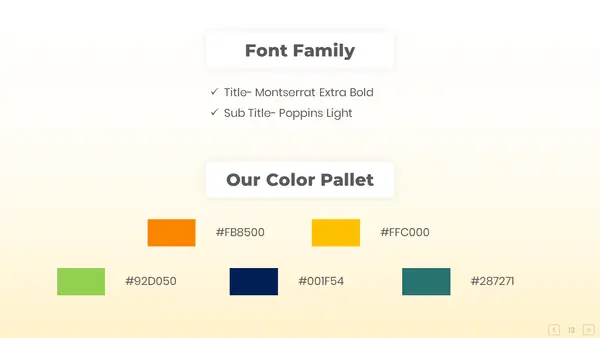
To add to the existing slides, we have included additional slides that showcase the font family and colour palette. These slides are designed to help you grasp the fonts and colours utilized in the presentation. Furthermore, we have added a slide for Questions and Answers, which aims to offer further clarification about the Traffic Rules.
In summary, our Traffic Rules PPT Templates are designed to elevate your presentation on road safety and regulations. Featuring 16 adaptable slides covering essential topics such as road signs, traffic signals, and safety measures, this template allows you to effectively communicate the importance of traffic rules. Whether you’re educating the public, training employees, or advocating for road safety, this tool provides everything you need to engage and inform your audience. Download it today in PPT, Canva, or Google Slides formats and enhance your traffic rules presentation with ease.
FAQs
1. What is the importance of Traffic Rules?
Traffic rules are essential for maintaining order on the roads and ensuring the safety of all road users, including drivers, pedestrians, and cyclists. They help regulate traffic flow, reduce accidents, and save lives.
2. How do seatbelts and helmets save lives?
Seatbelts and helmets are vital safety gear that reduce the risk of injury or death in the event of an accident. Seatbelts secure passengers during collisions, while helmets protect bikers and cyclists from head injuries.
3. Why is driving too slow also dangerous?
Driving too slowly can disrupt traffic flow and cause accidents, especially in high-speed zones. It is important to maintain a balanced speed appropriate for road conditions.
4. How do speed limits contribute to road safety?
Speed limits are set based on road conditions and the surrounding environment. Adhering to speed limits helps drivers maintain control of their vehicles, reducing the risk of accidents and allowing enough time to react to potential hazards.
5. How can the Traffic Rule PPT template help in road safety education?
The Traffic Rule PPT template provides a comprehensive and customizable set of slides that cover key aspects of traffic regulations. It is a powerful tool for educating communities, improving corporate safety training, and promoting road safety.